

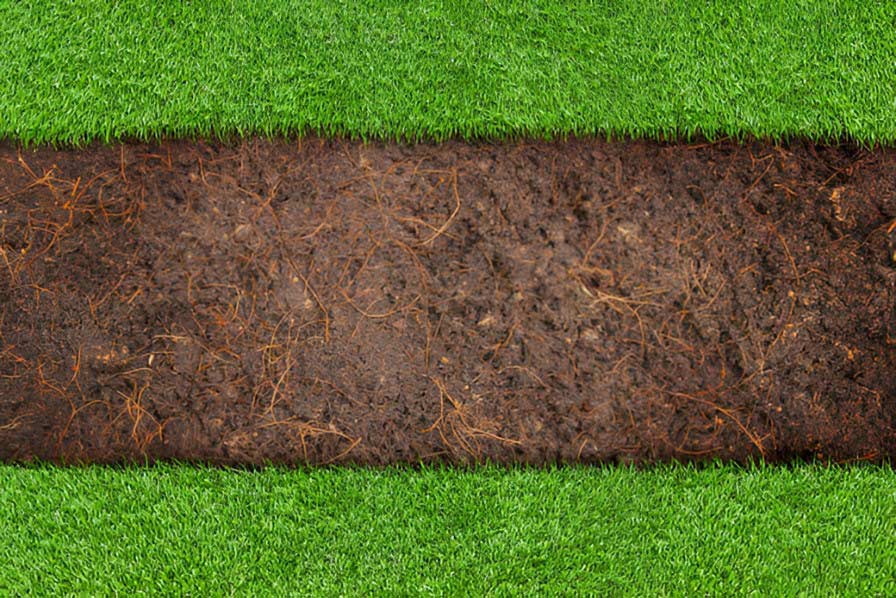
A truly deep green lawn does not begin with fertilizer or mowing patterns, it begins with soil. At Erbert Lawns, the most consistent results come from understanding how soil health directly shapes grass growth. When soil is balanced, structured, and biologically active, grass responds with stronger roots, richer color, and improved durability. Without that foundation, even the best lawn care efforts deliver only temporary results. Soil is not just support, it is the engine behind every healthy lawn.
- Key Takeaways
- Why Soil Quality Shapes Lawn Performance
- 1. Test Your Soil Before Anything Else
- 2. Balance Your Soil pH
- 3. Improve Soil Structure with Organic Matter
- 4. Aeration Unlocks Hidden Potential
- 5. Feed the Soil, Not Just the Grass
- 6. Water Deeply and Infrequently
- 7. Manage Thatch for Better Soil Contact
- 8. Choose the Right Grass for Your Soil
- 9. Avoid Overusing Chemicals
- 10. Consistency Is the Real Secret
- How Soil-Focused Lawn Care Delivers Better Results
- Conclusion
- FAQs:
Key Takeaways
- Soil health controls grass growth and color
- Balanced nutrients improve root strength
- Soil structure affects water and airflow
- Microbial activity supports long-term lawn health
- Consistent soil care delivers lasting results
Why Soil Quality Shapes Lawn Performance
A lawn’s appearance and strength depend on the condition of the soil beneath it. While mowing and watering are visible parts of lawn care, soil management plays a critical role behind the scenes. Healthy soil supports proper nutrient absorption, root development, and long-term resilience. The soil health directly affects plant growth and sustainability, while poor soil conditions often result in weak turf and uneven lawn coverage. For this reason, Erbert Lawns prioritizes soil-focused strategies rather than relying on surface-level treatments.
Key reasons soil quality is essential include:
- Supporting strong root development and overall turf health
- Improving nutrient absorption for consistent growth
- Enhancing resilience against stress and environmental conditions
- Preventing a patchy or uneven lawn appearance
- Creating a stable foundation for long-term lawn performance
These factors highlight why managing soil properly is essential for achieving a healthy, deep green lawn.
Lawns vary widely depending on climate, grass type, and regional conditions. However, one principle remains consistent everywhere: if your soil isn’t healthy, your lawn won’t thrive. Understanding how to improve and maintain your soil can dramatically transform your lawn from patchy and dull to thick and vibrant.
Here are some powerful soil secrets that can help you achieve the deep green lawn you’ve always wanted.
1. Test Your Soil Before Anything Else
Before adding fertilizers or treatments, it’s essential to know what your soil actually needs. Soil testing is often overlooked, but it’s one of the most important steps in lawn care.
A soil test reveals the nutrient levels and pH balance, allowing you to make informed decisions.
Why soil testing matters:
- Identifies deficiencies in key nutrients like nitrogen, phosphorus, and potassium
- Determines soil pH, which affects nutrient absorption
- Prevents overuse of fertilizers
- Helps you choose the right soil amendments
- Saves time and money by targeting specific issues
Most local extension offices offer affordable soil testing, making it easy to get accurate results.
2. Balance Your Soil pH
Soil pH plays a critical role in how well your grass absorbs nutrients. Even if your soil contains the right nutrients, an unbalanced pH can prevent your lawn from using them effectively.
Most grasses thrive in slightly acidic to neutral soil, typically between 6.0 and 7.0.
How to manage soil pH:
- Apply lime to increase soil pH when acidity levels are too high.
- Use sulfur to lower the pH if the soil is too alkaline
- Test pH regularly to monitor changes
- Apply amendments gradually to avoid shock
- Follow recommended application rates carefully
Balancing your soil pH creates the ideal environment for healthy grass growth.
3. Improve Soil Structure with Organic Matter
Soil structure determines how well air, water, and nutrients move through the ground. Compacted or poor-quality soil can restrict root growth and limit your lawn’s potential.
Adding organic matter is one of the best ways to improve soil health.
Benefits of organic matter:
- Enhances soil aeration and drainage
- Improves water retention
- Encourages beneficial microbial activity
- Provides slow-release nutrients
- Reduces soil compaction
Common sources of organic matter include compost, grass clippings, and leaf mulch. Regularly adding these materials can significantly improve your soil over time.
4. Aeration Unlocks Hidden Potential
Over time, soil can become compacted due to foot traffic, heavy equipment, and natural settling. Compacted soil restricts the flow of air, water, and nutrients to the roots.
Lawn aeration is a simple but powerful technique that helps loosen the soil and improve overall lawn health.
Key benefits of aeration:
- Increases oxygen flow to the roots
- Enhances water absorption
- Promotes deeper root growth
- Improves the effectiveness of fertilizers
- Reduces thatch buildup
Core aeration, which removes small plugs of soil, is particularly effective for lawns with heavy compaction.
5. Feed the Soil, Not Just the Grass
Many homeowners focus solely on feeding their grass with fertilizers, but professionals understand the importance of feeding the soil itself. Healthy soil is full of beneficial microorganisms that help break down nutrients and make them available to plants.
By nurturing the soil ecosystem, you create a self-sustaining environment for your lawn.
Ways to feed your soil:
- Apply compost or organic fertilizers
- Use natural soil conditioners
- Avoid excessive chemical treatments
- Encourage earthworms and beneficial microbes
- Practice grasscycling (leaving clippings on the lawn)
When your soil is alive and thriving, your grass will naturally become greener and stronger.
6. Water Deeply and Infrequently
Watering habits have a direct impact on soil health. Shallow, frequent watering can lead to weak root systems and poor soil conditions.
Effective watering practices:
- Water early in the morning to reduce evaporation
- Provide approximately 1 to 1.5 inches of water each week.
- Let the soil dry slightly between each watering session.
- Adjust watering based on weather conditions
- Avoid overwatering, which can lead to root rot
Healthy soil retains moisture more effectively, reducing the need for constant watering.
7. Manage Thatch for Better Soil Contact
Thatch is a layer of dead grass and organic material that accumulates between the soil and the grass blades. While a thin layer can be beneficial, too much thatch can block water and nutrients from reaching the soil.
Managing thatch is essential for maintaining proper soil contact.
How to control thatch:
- Dethatch when the layer exceeds half an inch
- Aerate regularly to break up buildup
- Avoid over-fertilizing, which can increase thatch
- Maintain proper mowing practices
- Use organic methods to promote natural decomposition
Keeping thatch under control allows your soil to function more effectively.
8. Choose the Right Grass for Your Soil
Not all grass types perform well in every soil condition. Choosing the right grass for your region and soil type can make a significant difference in achieving a deep green lawn.
Matching grass to your environment reduces stress and improves growth.
Factors to consider:
- Climate and temperature range
- Soil type (sandy, clay, or loamy)
- Sunlight availability
- Water requirements
Maintenance preferences
Selecting the right grass ensures your soil and lawn work together rather than against each other.
9. Avoid Overusing Chemicals
While chemical fertilizers and pesticides can provide quick results, overusing them can harm your soil in the long run. These products can reduce microbial activity and lead to soil degradation.
A balanced approach is key to maintaining healthy soil.
Risks of excessive chemical use:
- Disrupts natural soil ecosystems
- Reduces beneficial organisms
- Leads to nutrient imbalances
- Increases environmental impact
- Can damage the grass over time
Incorporating organic and natural methods helps maintain long-term soil health.
10. Consistency Is the Real Secret
Improving soil health isn’t a one-time task, it requires ongoing care and attention.
Developing a regular lawn care routine is essential for lasting results.
Consistency tips:
- Test soil every 1–2 years
- Aerate annually or as needed
- Add organic matter regularly
- Follow a seasonal fertilization plan
- Monitor lawn health and adjust practices
By staying consistent, you create a strong foundation for a deep green lawn year after year.
How Soil-Focused Lawn Care Delivers Better Results
Many lawn care approaches focus on visible improvements. Soil-focused care takes a more structured path.
It emphasizes:
- Root-level strength
- Nutrient efficiency
- Long-term stability
This method reduces dependency on repeated surface treatments and creates a lawn that maintains its quality over time.
At Erbert Lawns, this approach ensures lawns remain consistent, resilient, and visually refined throughout changing seasons.
Conclusion
A deep green lawn is not achieved through surface treatments alone. It is built through careful soil management, balanced nutrients, and consistent care. When soil conditions are optimized, lawns naturally become healthier, stronger, and more resilient. If your lawn is not performing as expected, the issue may lie beneath the surface. Contact us today to access professional lawn care solutions designed to improve soil health and deliver long-lasting results.
FAQs:
Why is soil important for lawn health?
Soil provides nutrients, supports root growth, and determines how well grass absorbs water and fertilizer.
How can I improve my lawn soil?
Improving soil involves testing, adding organic matter, adjusting pH, and maintaining proper aeration.
What is the best soil pH for lawns?
Most lawns perform best with a pH between 6.0 and 7.0.
How often should I test my soil?
Soil testing is recommended every one to two years to maintain balance and accuracy.
Does aeration really help lawns?
Yes. Aeration improves airflow, water absorption, and root development.
Can poor soil cause patchy grass?
Yes. Weak soil conditions often lead to uneven growth and thin areas.

Kelsey Keller
Business Manager
With six years of experience in lawn care, Kelsey Keller has learned the
many facets of what it takes to make lawn green and weed free. She pays close attention to
what customers need and what will make their lawn happy. She continues to learn and discover
what the turfs in Colorado need to be able to thrive.